



A new academic leadership team will be installed and 31 vicars inducted into their preparatory service during a celebratory service at the Castle Church in Wittenberg on September 1, 2026, at 6:00 p.m.
On September 1, the new vicars of the 2026–2028 training cohort will be admitted to preparatory service and blessed for their ministry during a service at the Castle Church at 6:00 p.m.
This marks the first time that this phase of training begins jointly at the Wittenberg Preachers' Seminary for vicars from the Evangelical Church of Anhalt (3), the Evangelical Church of Berlin-Brandenburg-Silesian Upper Lusatia (15), and the Evangelical Church in Central Germany (13).
Through this step, the regional churches demonstrate their close cooperation regarding training for ordained ministry. To this end, they have also harmonized their regulations governing preparatory service and examinations.
This structural shift is accompanied by personnel changes and new beginnings:
During the service, Pastor Dr. Miriam Wojakowska (Berlin) and Pastor Sören Brenner (Halle/Saale) will be installed in their new roles as academic directors at the Evangelical Preachers' Seminary in Wittenberg.
Pastor Dr. Wojakowska currently serves as a parish pastor at St. Michael in Ludwigsfelde and as a school chaplain. Pastor Sören Brenner currently serves as the schools representative for the Evangelical Church in Central Germany.
This completes the academic leadership team.
Already active in the seminary’s teaching program are Pastor Jasmin El-Manhy, Cantor Philipp Spielmann, Pastor Olaf Trenn, and Pastor Ann-Sophie Wetzer, alongside Director Birgit Neumann-Becker. They, too, will be blessed for their shared ministry during the service. The training of pastors during their vicarage—the practical training phase—is essentially a dual program: it takes place practically in schools and congregations, as well as through more experimental, hands-on work at the preachers' seminary. The academic leadership works with the vicars during courses held in Wittenberg while simultaneously supporting their practical training within the congregations.
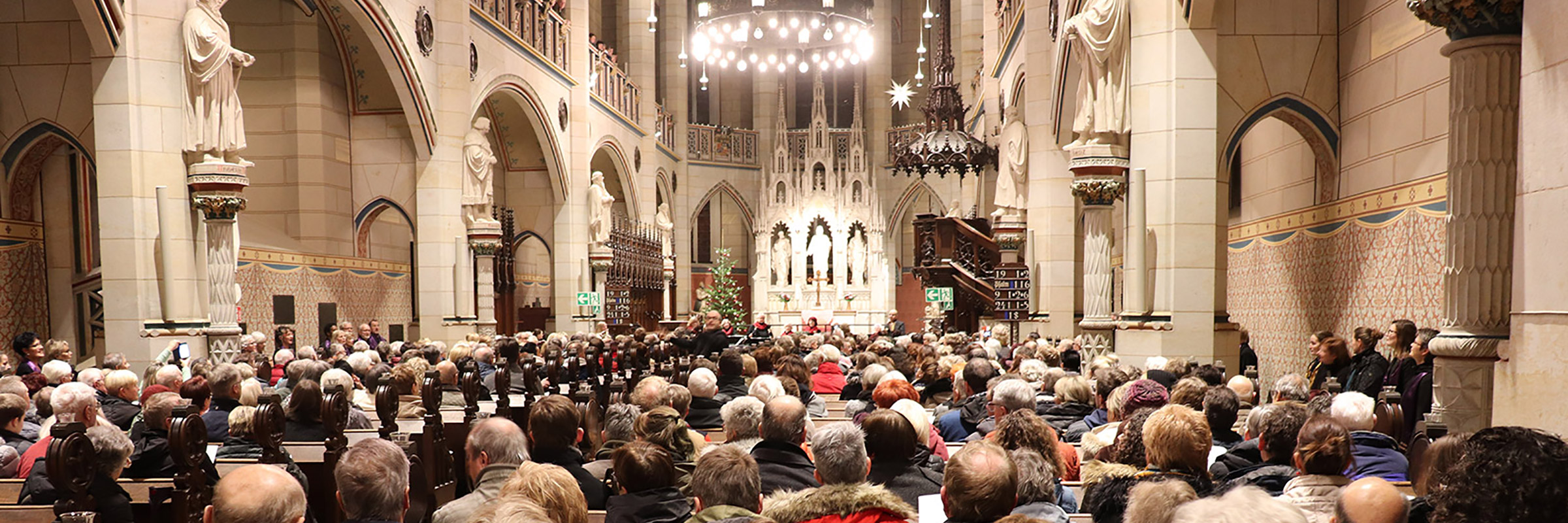
The church service is open to the public and is conducted with the participation of the Castle Church congregation.
After a brief hiatus, vicars will once again be conducting services in the Castle Church more frequently, starting September 20.
Director Birgit Neumann-Becker:
"Churches in eastern Germany are closely linked by their shared minority status and similar historical contexts. Pastoral ministry entails a mandate 'to help people live with gratitude and die with comfort; to give up on no one and to support all who need assistance.' In times of social and political tension, this is a vital task. Churches and congregations bear a special responsibility for local community and mutual understanding—an aspect that is also a focus of the training program.
Therefore, the training of pastors aims to foster knowledge of the Protestant tradition alongside the courage to embrace renewed forms of ministry; to cultivate a deep understanding of people's diverse life situations and hardships; and to develop and practice a language that makes the Christian message of hope accessible and understandable."
Background
Founded in 1816/17, the Evangelical Preachers' Seminary in Wittenberg has been training theologians for ministry—serving the Word and Sacrament—at the very birthplace of the Reformation for 210 years. It operates as a dependent institution of the UEK (Union of Protestant Churches). At the Wittenberg Protestant Preachers' Seminary, the Evangelical Church of Anhalt, the Evangelical Church of Berlin-Brandenburg-Silesian Upper Lusatia, the Evangelical Church in Central Germany, and the EKU Foundation collaborate to keep the theological legacy of Luther, Melanchthon, and Bugenhagen alive and to strengthen Wittenberg’s ecumenical influence.
Training takes place primarily on the seminary floor of Wittenberg Castle. The Preachers' Seminary complex also includes the Castle Church, the Research Library for Reformation History, and the Christine Bourbeck House, where the trainee pastors reside.
A long-standing partnership came to an end in April 2026: the Evangelical Lutheran Church of Saxony terminated its training cooperation in Wittenberg and has since been training its trainee pastors jointly with the Evangelical Lutheran Church in Bavaria.
As early as May 2026, 37 trainee pastors began their training under the newly established course system.