Select your language



Events Calendar

| Mon | Tue | Wed | Thu | Fri | Sat | Sun |
Under the motto "Frederick's Castle Through the Ages – Change – Impact – Vision," special guided tours are offered in commemoration of Frederick the Wise – through parts of the south tower and the Reformation History Research Library. Photo: © Andreas Bechert
30 Years of World Heritage
In 1996, the castle church was inscribed on the UNESCO World Heritage List as an almost completely preserved prime example of 19th-century monument preservation. From 2012 to 2016, it was renovated and restored with funding from the State of Saxony-Anhalt, the Federal Republic of Germany, the European Union, and private donors.
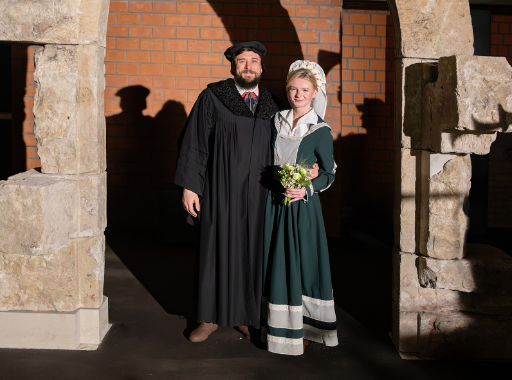
Parade for the 30th City Festival “Luther’s Wedding” on June 13th
This year, as the City and Castle Church Parish, we also want to participate in the parade on Saturday, June 13th, especially since this festival is celebrating its 30th anniversary.
History
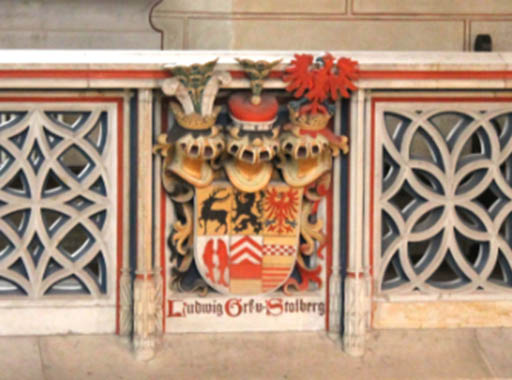
Around 1340, the Ascanian dukes had an "All Saints' Chapel" built at their castle and founded a collegiate monastery in it for liturgical service. Elector Friedrich the Wise had the palace with the chapel demolished and his new residential palace with a more spacious palace church built on the site. You can find out more about the story here.
Church for children
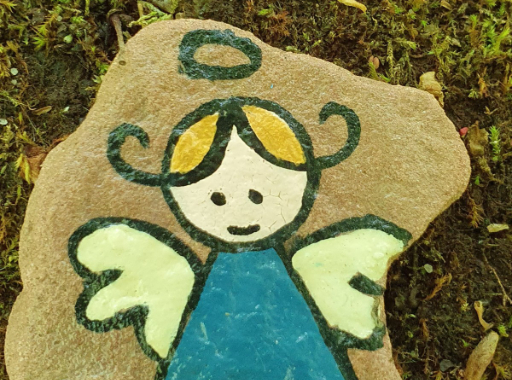
Every Sunday there is a children's service in the Wittenberg Castle Church, parallel to the adult service. Ms. Felicia Grauel is one of the volunteers for the children's service.